
Stress fractures
in runners.Symptoms, recovery time and physio and osteo treatment, from the physios who treat bone stress injuries every week.
We run over 1,500 running physio appointments per week and treat multiple bone stress injuries every single day.
Bone adapts.
Until it can't.
A stress fracture is a breakdown in a bone that builds over time. It comes from more running load than the bone can recover from, not from one big impact.
Every run causes tiny amounts of damage. Your body repairs it and the bone gets stronger. A bone stress injury happens when damage builds up faster than the bone can repair it. That usually follows a jump in training, too little recovery, or not eating enough to fuel your running.
A stress reaction is bone damage seen on MRI with no clear fracture line, and it recovers faster. A stress fracture has a fracture line and needs longer protection and rehabilitation. Read more about bone stress injury grades.
Know the signs
early.
Caught as a stress reaction, most runners are back sooner. These are the patterns we see most.
It crept up on you
Pain builds over days or weeks. There's no single moment you can point to.
You may be able to point to one spot
The pain sits on one area of bone and is tender to press.
For some runners the pain is more diffuse and spreads to other areas.
It's spreading beyond running
At first it may only hurt on your runs. Later it may ache when walking, on stairs or at night.
Some runners don't have much pain at all. Instead it shows up as reduced strength or power.
Hopping hurts
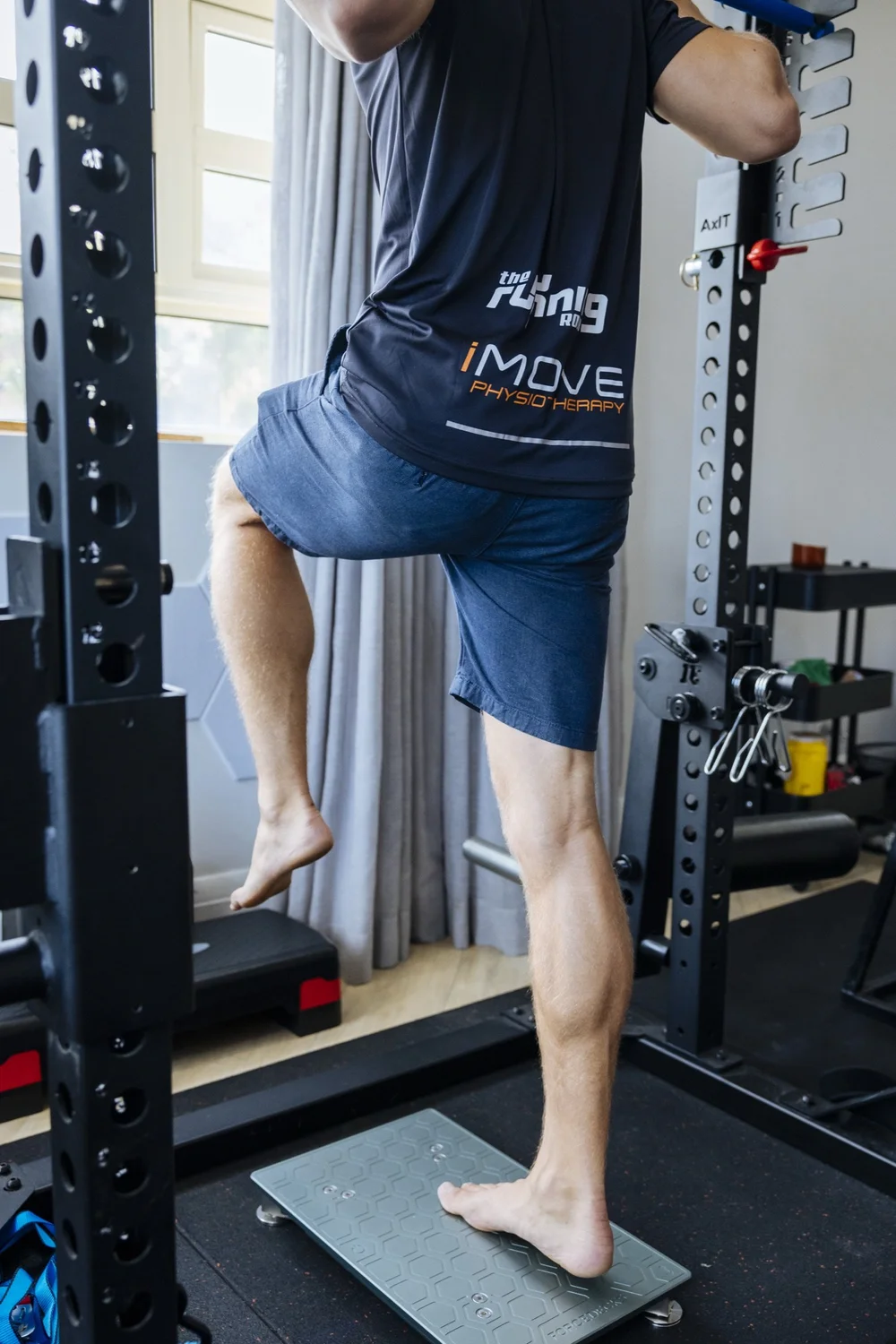
Single leg hops on the sore side are painful. There may be mild swelling, often on top of the foot, when a bone stress injury is present.
Stop running and get assessed this week if you have groin or deep hip pain when running, pain on the front of the shin bone, or pain on the top and inside of the midfoot. These can be high risk stress fractures (femoral neck, anterior tibia, navicular). Running through them can lead to a complete fracture, and they need to be assessed by an experienced health professional.
Shin splints
or something more?
Shin splints (medial tibial stress syndrome) and a tibial stress fracture can feel alike. They're managed very differently.
| Shin splints | Stress fracture | |
|---|---|---|
| Where it hurts | Spread along the inner shin, often 5cm or more | One sharp, very tender spot |
| During a run | Often eases once warmed up | Gets worse the further you go |
| Walking and night | Usually fine | Can ache walking or at night |
| Hop test | Usually OK | Often painful |
Not sure which you have? Read about shin splints and medial tibial stress syndrome, or book in. We'll tell them apart at your first appointment and get you back to running pain free.
Where it is
changes everything.
Each bone is classed as low risk or high risk depending on how well it heals and how likely it is to progress to a full fracture.
Tibia (inner shin)
The most common site in runners. Usually heals well with load changes and a staged return to running. See our tibial stress fracture guide.
2nd to 4th metatarsals
The classic foot stress fracture. Pain and swelling on top of the forefoot, often after more mileage or speed work. See our foot stress fracture guide.
Calcaneus (heel)
Pain when you squeeze the sides of the heel. Often mistaken for plantar fasciitis. See our foot stress fracture guide.
Fibula
Outer lower leg. Usually allows modified loading while it heals.
Femoral neck (hip)
Deep groin or hip pain on runs. Needs urgent assessment and must not be run through. See our hip stress fracture guide.
Navicular (midfoot)
Vague pain at the top and inside of the midfoot. Easy to miss, slow to heal. See our navicular stress fracture guide.
Anterior tibia
The front of the shin bone. Prone to slow or delayed healing. See our tibial stress fracture guide.
5th metatarsal and sesamoids
Outer midfoot, or under the big toe joint. Poor blood supply means slower healing. See our foot stress fracture guide.
Sacrum and pelvis
Low back, buttock or groin pain. Usually heals well, but strongly linked to low energy intake (RED S) and low bone density, so it needs a bone health check. See our hip and pelvic stress fracture guide.
How long
until I run?
It depends on the bone, the grade on MRI, and how long you'd been running on it. These are typical ranges. Your physio will give you a timeline for your own injury.
Low grade stress reaction
At a low risk site, caught early. Usually managed with load changes rather than complete rest.
Stress fracture, low risk site
Such as the inner tibia or the middle metatarsals. A period of protection, then a staged return.
High risk site
Navicular, femoral neck and similar. Often needs a boot or crutches, and sometimes a surgical opinion.
"Running again" isn't full training. Allow another 4 to 6 weeks to build back to your usual volume and speed work.
These numbers are a guide. Rehabilitation always depends on your individual history and contributing factors, and our stress fracture physios are well equipped to guide you to a safe return to running after injury.
Average time
back to sport.
A 2023 review of 76 studies and almost 3,000 bone stress injuries found more than 90% of athletes got back to their sport. How long it took depended mostly on which bone was injured.
"Back to sport" means back to full training or competition, not your first run. These are averages across many studies. Your own timeline depends on the grade of injury and how early it was caught.
Source: Hoenig T, et al. Return to sport following low risk and high risk bone stress injuries: a systematic review and meta analysis. Br J Sports Med 2023;57:427 to 432. doi:10.1136/bjsports-2022-106328
Heal it.
Then fix why.
Accurate diagnosis
We take a detailed history: training load, recent changes, footwear, past injuries, fuelling and nutrition, plus menstrual history (females) or libido and morning erections (males) as a guide to hormonal health. Then we examine the bone and test with single leg hops and special tests. Where needed, we refer for MRI, X ray or CT to detect your bone stress early. This tells us how severe the injury is, which guides your rehabilitation and the timing of your return to running.
Protect the bone
Low risk, low grade injuries usually need activity changes, not always complete rest: walking, cycling, swimming or deep water running, kept pain free. Higher grade or high risk injuries may need a CAM boot or crutches for a period of time, so the bone can heal properly before it's loaded again.
Stay strong while it heals
We keep training everything we safely can: calf, hip and trunk strength, plus cross training to hold your fitness. Maintaining fitness and building strength lets you complete the return to run process safely and in a timely manner.
Find the cause
A stress fracture almost always has a cause. Fixing it is how you prevent a future one.
- Training load: sudden jumps in distance, speed, hills or a race build
- Energy and bone health: low energy availability (RED S), irregular periods, loss of morning erections, blood markers, nutrition and hormonal health, addressed by our team with referrals to our network of sports doctors and nutritionists
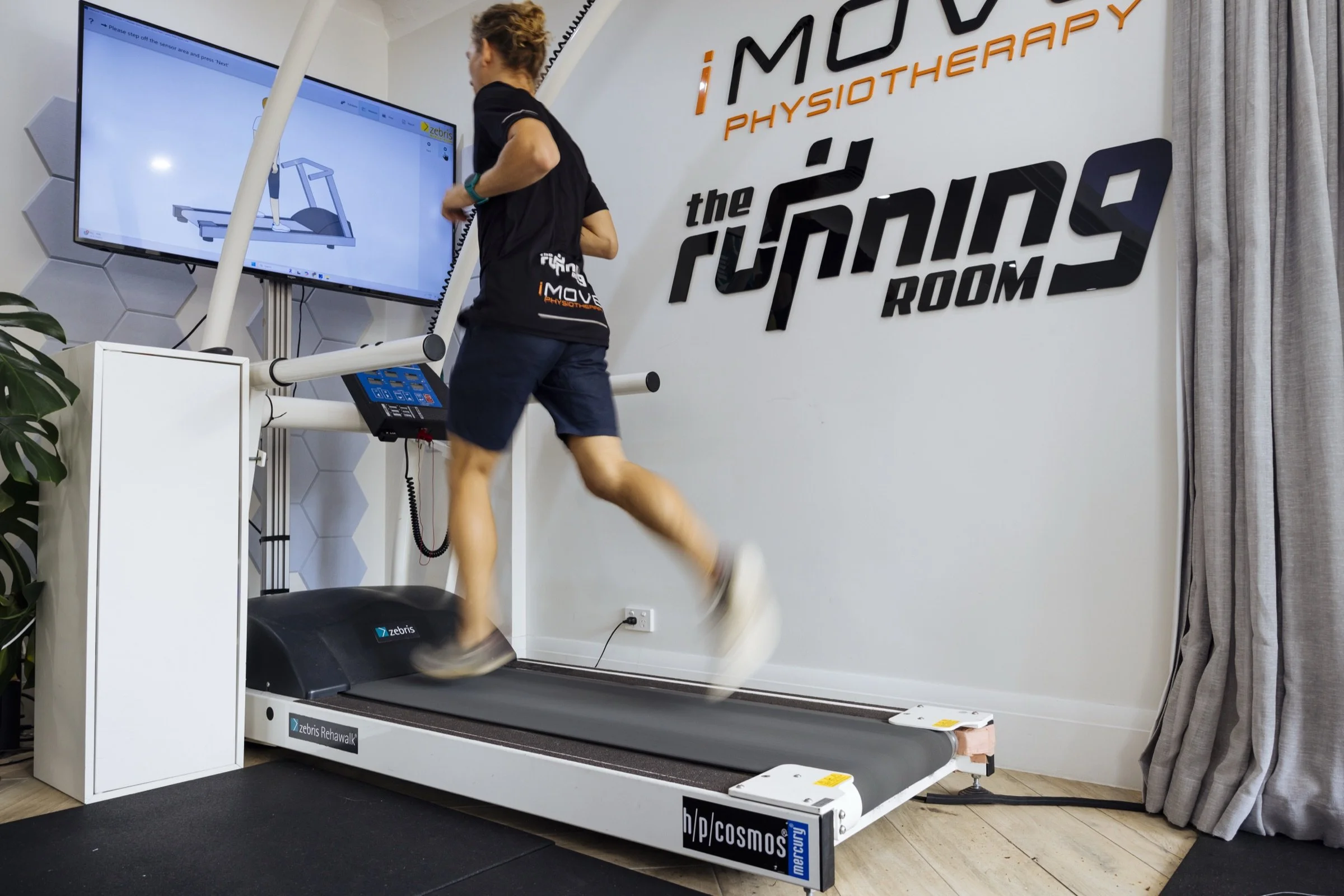
- Running mechanics: gait analysis on our Zebris instrumented treadmill
- Strength: VALD force plate and dynamometry testing
- Footwear and training: structure, habits and recovery
Return to running, properly
A structured walk and run program that builds over weeks to months, guided by our stress fracture physios and your symptoms. Speed work, tempo and hills come back last.
Three markers
before you run.
Around a week of pain free walking, including on the day after.
Pain free single leg hops on the injured side.
A gradual walk run build on alternate days before normal training returns.
Note: this is a rough guide, centred on low risk bone stress sites. With high risk bone stress injuries we take a more comprehensive approach, assessing healing with repeat imaging and symptoms, and addressing other contributing factors.
Can I run with a stress fracture? No. Running on a high risk stress fracture can cause a more serious injury and can lead to a complete break and possibly surgery.
Low risk sites have a faster return to run timeline than high risk sites, but if there is a true fracture line on imaging you will have a period of relative rest. Depending on the severity of your injury, cross training keeps your fitness while the bone heals.
Risk factors
- A recent jump in distance, pace or frequency, often in a marathon build
- A previous bone stress injury, which raises the risk a lot
- Low energy availability or RED S: not eating enough for your training
- Missed or irregular periods, or reduced libido or loss of morning erections
- Low body weight, low vitamin D or low bone density
- Higher running volume
Prevention
- Build mileage gradually and plan lighter deload weeks
- Fuel your training, with carbohydrate around key sessions
- Strength train twice a week, including calf raises plus skipping and hopping
- Lift your cadence 5 to 10% if you overstride
- Have an experienced team around you who can guide your training, fuelling and progression
- Act early. A sore spot on the bone that's worse next morning is worth checking. Not sure? Read niggle or injury.
Runners treated
Years treating runners
Five star Google reviews
Highly experienced stress fracture physios. We treat stress fractures every single day and run over 1,500 running physio appointments per week.
We treat runners.
Every day.
From first time half marathoners to ultra runners. Our team was the treating physio for Nedd Brockmann across both of his runs across Australia and his thousand mile track run.
Bone stress injuries are one of the most common things we see. You get a running physio who understands load, bone health and what it takes to get you back to the start line.

Real runners.
Real results.
Book your
assessment.
No GP referral needed. We refer for MRI when it's needed. Private health insurance accepted at all Australian clinics.
Questions
answered.
Will a stress fracture show on an X ray?
It can, depending on the severity of the injury. For lower grades of injury it often won't, especially in the early stages. MRI is considered the gold standard because it shows bone stress (high signal) before a fracture line appears and lets us grade the injury. We can refer you for imaging.
Can a stress fracture heal on its own?
Low risk stress fractures often heal if you take load off the bone. But if the cause (training load, fuelling, hormonal health, strength) isn't fixed, they commonly come back. High risk sites need proper management to avoid a complete fracture.
Do I need a moon boot?
Not always. Many low risk injuries are managed with load changes and cross training. A CAM (moon) boot or crutches are used for higher grade injuries, high risk sites, or when walking is painful.
Can I cross train with a stress fracture?
It depends on the site and severity of the injury. Our team makes an informed decision on what you need to do to get back to running pain free, safely. In many cases cycling, swimming, deep water running and strength work are fine with our guidance, as long as they're pain free. We'll tell you exactly what's safe for your injury.
What's the difference between a stress reaction and a stress fracture?
A stress reaction is an early sign of a bone stress injury. It shows up as high signal within the bone, without a fracture line. A stress fracture has a visible fracture line on imaging (MRI, CT or X ray). Both are bone stress injuries, and a stress reaction usually means a quicker return to running.
Why do I keep getting stress fractures?
Repeat bone stress injuries usually point to an underlying cause: low energy availability or RED S, hormonal changes, low vitamin D or bone density, or a training pattern that keeps spiking load. It's worth a full assessment, and often a bone health check, rather than just resting each time without addressing what caused the injury. Our team can refer you to our network of experts, such as sports doctors, dietitians, nutritionists and sports psychologists, where needed.
Do I need a referral to see a physio for a stress fracture?
No. You can book directly with our physios and osteos, and we'll refer you for imaging or to a sports doctor if needed.
Get answers.
Run free.
The sooner it's diagnosed, the sooner you're back running. Book a running physio assessment at your nearest clinic.
This page is general information and isn't a substitute for an individual assessment. If you have sudden severe pain, can't put weight through your leg, or have significant hip or groin pain, seek medical care promptly.