

Hip stress
fracture.Femoral neck, thigh bone, pelvis and sacrum. Symptoms, recovery time and treatment from the running physios who treat bone stress injuries every week.
What is a hip stress fractureDeep pain.
Serious injury.
A hip stress fracture is a breakdown in the neck of the thigh bone (femoral neck), the thigh bone itself, the pelvis or the sacrum, built up over weeks of running rather than from a fall. It usually shows as a deep ache in the groin or front of the hip that gets worse the more you run.
These bones are exposed to load whilst running. When mileage, speed or a race build outpaces the bone's ability to repair, or you aren't eating enough to fuel your training, damage builds up faster than it heals. Hip and pelvic stress fractures are less common than shin and foot ones, but they matter more: a femoral neck stress fracture that keeps being loaded can break completely, which can mean surgery. They're also more closely linked to low energy availability and low bone density than other sites, so finding the cause is part of the treatment.
New to bone stress injuries? Start with our stress fracture guide.
Hip stress fracture symptomsSigns of a
hip stress fracture.
The main sign of a hip stress fracture is a deep, hard to pinpoint ache in the groin or front of the hip that builds over a run and lingers afterwards. It often hurts to stand on that leg, to hop, or to turn the hip inwards. Sacral and pelvic stress fractures are felt lower down, in the buttock, low back or inner groin.
Deep groin or front of hip pain
Felt inside the hip rather than on the surface, sometimes spreading to the front of the thigh or knee.
Worse with every run
It builds through each run and through the week, and starts to ache with walking.
Pain standing on one leg or hopping
Hopping on the sore side is often too painful to do. You may start to limp.
Night or rest pain
An ache in bed or after sitting is a sign the bone is struggling, not just tired.
Stop running today and get assessed within 24 to 48 hours if you have groin or deep hip pain when running and it hurts to hop or to stand on that leg. A femoral neck stress fracture can break completely if you keep loading it. If you can't put weight through the leg, seek medical care the same day.
Hip pain when runningFracture, strain
or something else?
Many bone stress injuries of the hip and pelvis are missed or misdiagnosed. We often see runners who have been told their pain is a muscle, tendon or joint problem, not a stress fracture. The signs that point to bone are a deep ache that builds with every run, pain when you hop or stand on one leg, and an ache at night. If those fit, stop running and get it checked before assuming it's a strain.
These injuries overlap in how they present, as the table below shows. That's why it's important to see physios who treat bone stress injuries every day for an accurate diagnosis and treatment plan.
| Where it hurts | What gives it away | |
|---|---|---|
| Femoral neck stress fracture | Deep groin, front of hip | Builds with every run, hopping hurts, aches at night |
| Groin strain | Inner thigh, close to the groin | Started with a sudden sprint or change of direction, sore when squeezing the knees together |
| Hip impingement (FAI) | Front of hip, deep in the joint | Pinching in deep squats or sitting low, often catching or clicking |
| Gluteal tendinopathy | Outside of the hip | Sore lying on that side, climbing stairs, standing on one leg, running |
| Proximal hamstring tendinopathy | Sitting bone, top of the hamstring | Sore sitting on hard chairs, running uphill, speed work |
| Sacral or pelvic stress fracture | Buttock, low back or inner groin | Deep ache with running and walking, often with low energy intake or missed periods |
Types of hip stress fractureWhere it is
changes everything.
Hip and pelvic stress fractures fall into four sites: the femoral neck, the femoral shaft (thigh bone), the pubic bone at the front of the pelvis, and the sacrum at the base of the spine. The femoral neck is the one to worry about. The others usually heal well but are a strong sign that bone health needs checking.
Femoral neck, top side
Tension side of the femoral neckThe bone is pulled apart on this side and can progress to a full break. Needs crutches straight away and an urgent orthopaedic opinion if the fracture line has progressed, and can lead to surgical fixation.
Femoral neck, underside
Compression side of the femoral neckThe more common type in runners. Usually managed without surgery, with a period on crutches and close monitoring with repeat imaging. Still a high risk injury that needs to be well managed.
Thigh bone
Femoral shaftDeep, vague thigh pain, often mistaken for a muscle strain. Usually heals well with a period of offloading and a staged return.
Front of the pelvis
Pubic ramusInner groin pain, worse with running and stairs. Heals well, but is strongly linked to low energy availability and low bone density.
Base of the spine
SacrumButtock or low back pain that feels like back pain but worsens with running and hopping. Strongly linked to RED S, missed periods, loss of morning erections and low bone density.
Hip stress fracture recovery timeHow long
until I run?
Recovery from a hip stress fracture depends on the bone. Pubic and thigh bone stress fractures average about 11 to 12 weeks back to sport. Femoral neck stress fractures take longer, about 15 weeks on average in a 2023 review of 76 studies, and only 55% of athletes got back to their sport, so careful early management matters.
Pelvis or thigh bone
A period of offloading, then a staged walk and run build.
Femoral neck, underside
Crutches first, repeat imaging to confirm healing, then a slow return.
Femoral neck, top side
Often surgical fixation if the fracture has progressed, then rehab guided by your surgeon and our stress fracture physios.
"Back to sport" means full training or competition, not your first run. Complications include slow healing, the bone not healing, the injury coming back, or needing surgery. Bars are scaled to the slowest bone in the review (navicular, 18 weeks).
Source: Hoenig T, et al. Return to sport following low risk and high risk bone stress injuries: a systematic review and meta analysis. Br J Sports Med 2023;57:427 to 432. doi:10.1136/bjsports-2022-106328
Hip stress fracture treatmentProtect it.
Then fix why.
Treatment for a hip stress fracture starts with an urgent MRI to find the exact bone and grade, then protecting the bone, often with crutches for a femoral neck injury. While it heals we keep you strong, investigate why it happened, especially energy intake and bone health, and then rebuild running gradually.
Confirm it fast
History, hop and single leg tests, hip range of motion, and a same week MRI referral. X rays may miss early hip stress fractures.
Protect the bone
Crutches for femoral neck injuries until healing is under way, and an urgent orthopaedic referral for top side (tension) femoral neck fractures. For pelvis and thigh bone injuries it depends on the grade: lower grade injuries usually need relative rest from running, while higher grade injuries or a fracture line on MRI may need a period on crutches.
Stay fit and strong
Pool running, swimming or upper body work while the bone heals, then progressive hip, glute and trunk strength as loading allows.
Check bone health
Hip, pelvic and sacral stress fractures are the ones most linked to low energy availability (RED S), missed periods or low testosterone, low vitamin D and low bone density. We screen for these and refer to our sports doctors and dietitians for blood tests and bone density scans where needed.
Return to running
Once the injury has been offloaded for a period of time, walking and hopping are pain free and imaging shows good signs of healing, a structured walk and run program over 6 weeks or more, with VALD strength testing and a Zebris treadmill gait check before speed work returns.
Can you run with a hip stress fracture? No. A femoral neck stress fracture that keeps being loaded can break completely, which may mean surgery and a far longer recovery. Stop running and get assessed.
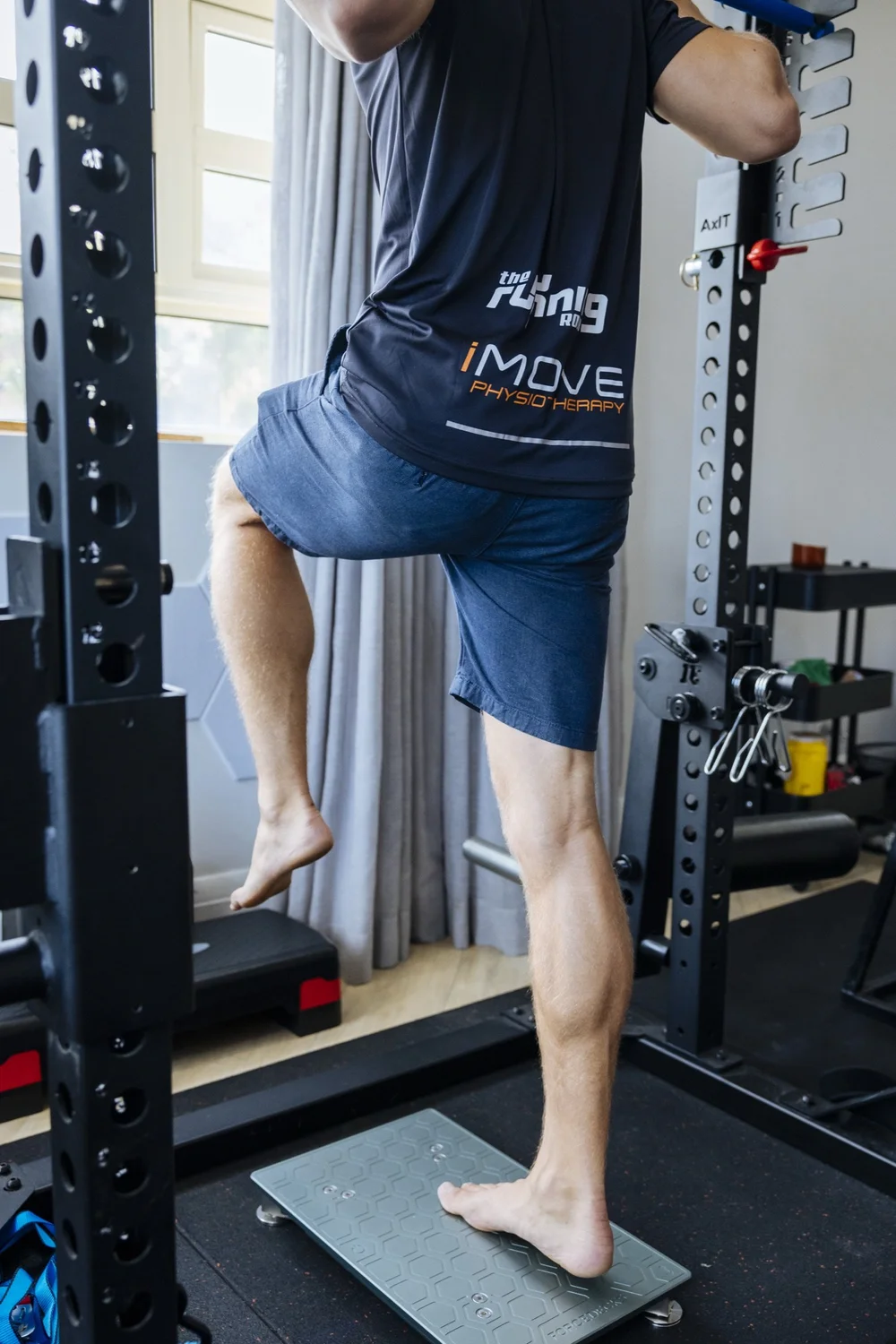
Hip stress fracture physio near youBook your
assessment.
No GP referral needed. We refer for MRI the same week when a hip stress fracture is suspected. Private health insurance accepted at all Australian clinics.
Hip stress fracture FAQsQuestions
answered.
Can you walk with a hip stress fracture?
Often only with crutches at first, especially for a femoral neck stress fracture. Walking on it before it's assessed is not advisable. For pelvic and thigh bone stress fractures it depends on the grade: lower grade injuries can often walk pain free with relative rest from running, while higher grade injuries usually need a period on crutches to allow healing. Get it confirmed with MRI and our stress fracture physios before deciding.
What does a femoral neck stress fracture feel like?
A deep ache in the groin or front of the hip that builds during runs, gets worse each week, and starts to hurt with walking, hopping or at night. It often feels like a groin strain that won't settle.
Is hip pain when running a stress fracture?
It can be, and it's often missed. We run over 1,500 running physio appointments a week and are seeing a big increase in hip pain related to bone stress in runners, much of it misdiagnosed as tendon, muscle or hip joint pain. Deep groin pain that builds with every run, hurts to hop on, or aches at night should be treated as a possible stress fracture until our physios and osteopaths or an MRI rule it out.
Does a femoral neck stress fracture need surgery?
Sometimes. Fractures on the top (tension) side of the femoral neck may need surgical fixation because they can displace. Those on the underside (compression side) usually heal with crutches and rest from running. Our team, your MRI and an orthopaedic opinion decide which.
What are the symptoms of a sacral stress fracture?
A deep ache in the buttock or low back that gets worse with running and hopping and eases with rest. It's often mistaken for back pain or sciatica. It's more common in female runners and strongly linked to low energy availability and low bone density.
Why are hip stress fractures more common in women?
Low energy availability (RED S), missed or irregular periods and lower bone density all raise the risk, and they affect women more often. Hip, pelvic and sacral bones are the sites most affected by low bone density, so these injuries are a prompt for a bone health check.
Will a hip stress fracture show on an X ray?
Often not in the early weeks. MRI is the gold standard, showing bone stress before a fracture line appears and grading the injury. For hip pain that could be a femoral neck stress fracture, we refer for MRI promptly.
Stop running.
Get it checked.
Hip stress fractures are the ones not to run through. Book a running physio assessment at your nearest clinic.
This page is general information and isn't a substitute for an individual assessment. If you can't put weight through your leg, have sudden severe hip or groin pain, or have had a fall, seek medical care promptly.