
Tibial stress
fracture.Symptoms, how it differs from shin splints, recovery time and treatment for a stress fracture in the shin, from the running physios who treat them every week.
What is a tibial stress fractureThe most common
bone stress injury.
A tibial stress fracture is a breakdown in the shin bone (tibia) that builds up over weeks of running, not from one knock or fall. It happens when running load outpaces the bone's ability to repair itself.
The shin is the most common site of bone stress injury in runners, and most occur on the inner border of the lower half of the shin. Every stride bends the tibia slightly. Normally the bone repairs that tiny damage and gets stronger. When mileage, pace or hills ramp up faster than the bone can adapt, or you aren't eating enough to fuel your training, damage builds up. First the bone becomes irritated (a stress reaction), then a crack can form (a stress fracture). Caught early, it usually heals well.
New to bone stress injuries? Start with our stress fracture guide.
Tibial stress fracture symptomsSigns of a
shin stress fracture.
The main sign of a tibial stress fracture is pain in one small spot on the shin bone that gets worse the further you run. It's tender to press, often on the inner edge of the lower shin, and in time it starts to ache when walking or at night.
One spot you can point to
The pain sits in an area about the size of a coin, not spread along the shin. Pressing on the bone there hurts.
Worse the further you run
Shin splints often ease once you warm up. A stress fracture usually builds through the run and lingers afterwards.
Pain beyond running
As it progresses it aches when walking, on stairs, or at night in bed.
Hopping hurts
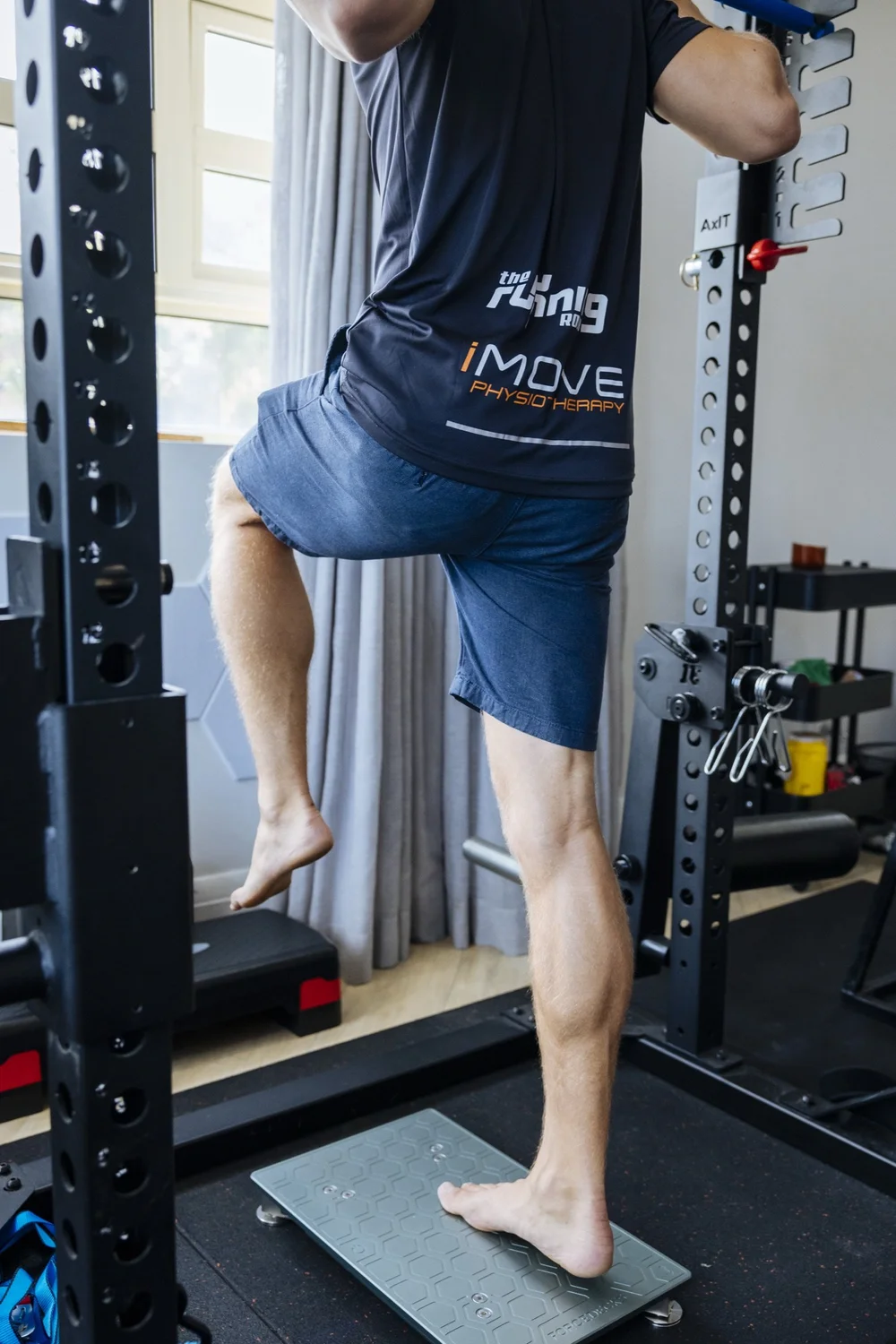
Single leg hops on the sore leg are painful, and there may be mild swelling over the spot.
Get assessed this week if the pain is on the front of the shin bone rather than the inner edge, or if you can't hop on that leg. Front of shin (anterior tibia) stress fractures are high risk: they heal slowly and can progress to a complete fracture if you keep running.
Shin splints vs stress fractureShin splints
or a fracture?
Shin splints (medial tibial stress syndrome) cause a dull ache spread along the inner shin that often eases as you warm up. A tibial stress fracture causes sharp pain in one spot that gets worse as you run and later hurts at rest. If you can cover the sore area with a fingertip and hopping hurts, think stress fracture and get it checked.
| Shin splints | Tibial stress fracture | |
|---|---|---|
| Where it hurts | Spread along the inner shin, often 5cm or more | One spot, about the size of a coin |
| During a run | Often eases once warmed up | Gets worse the further you go |
| After running | Sore next morning, then settles | Aches walking, on stairs or at night |
| Pressing the bone | Tender along a long strip | Sharp pain at one point |
| Hop test | Usually OK | Often painful |
| Imaging | MRI may show mild bone swelling | MRI shows bone stress or a fracture line |
The two sit on the same scale: untreated shin splints can progress to a stress reaction and then a fracture. Read more about shin splints and medial tibial stress syndrome.
Types of tibial stress fractureInner edge
or front?
Where the fracture sits on the shin decides how it's managed. Most runners' tibial stress fractures are on the inner (posteromedial) edge, which is low risk and usually heals well. Fractures on the front (anterior) of the tibia are high risk, and the fibula on the outside of the leg is low risk.
Inner edge of the shin
Posteromedial tibiaThe classic runner's stress fracture, usually in the lower half of the shin. The bone is compressed here, so it tends to heal well with less load and a staged return.
Front of the shin
Anterior tibiaLess common in runners, more common in jumping sports. The bone is pulled apart on this side and has a poorer blood supply, so it can heal slowly. On X ray it may show as a thin line across the front of the bone. Needs specialist management and a period of offloading and rest.
Outside of the lower leg
FibulaThe thin bone on the outside of the leg, usually a few centimetres above the ankle. It carries less load, so it usually allows modified loading while it heals.
Tibial stress fracture recovery timeHow long
until I run?
Most runners with a stress fracture on the inner edge of the shin are back to full training in about 6 to 12 weeks. A 2023 review of 76 studies found the average time back to sport was 44 days (about 6 weeks), and almost 98% of athletes got back. Front of shin fractures take longer and run into complications far more often.
Stress reaction, inner shin
Caught early, before a fracture line forms. Usually managed with less running, not complete rest.
Stress fracture, inner shin
A period of protected loading, then a walk and run build.
Front of shin
Often needs a boot or crutches and repeat imaging, and sometimes a surgical opinion.
"Back to sport" means full training or competition, not your first run. Complications include slow healing, the bone not healing, the injury coming back, or needing surgery. Bars are scaled to the slowest bone in the review (navicular, 18 weeks).
Source: Hoenig T, et al. Return to sport following low risk and high risk bone stress injuries: a systematic review and meta analysis. Br J Sports Med 2023;57:427 to 432. doi:10.1136/bjsports-2022-106328
Tibial stress fracture treatmentHeal it.
Then fix why.
Treatment for a tibial stress fracture is a period of reduced load so the bone can heal, strength work to protect it, fixing whatever caused it, then a gradual walk and run return. Most inner shin fractures don't need a boot or crutches. Front of shin fractures often do, and may need a surgical opinion.
Confirm it
History, pressing on the bone, hop testing and, where needed, a referral for MRI, which shows bone stress weeks before an X ray does.
Unload the shin
Stop running and keep walking pain free. Use a boot or crutches only if walking hurts or the fracture is high risk.
Stay fit and strong
Cycling, swimming or deep water running where pain free, plus calf, hip and trunk strength, so muscles absorb more load before it reaches the bone.
Find the cause
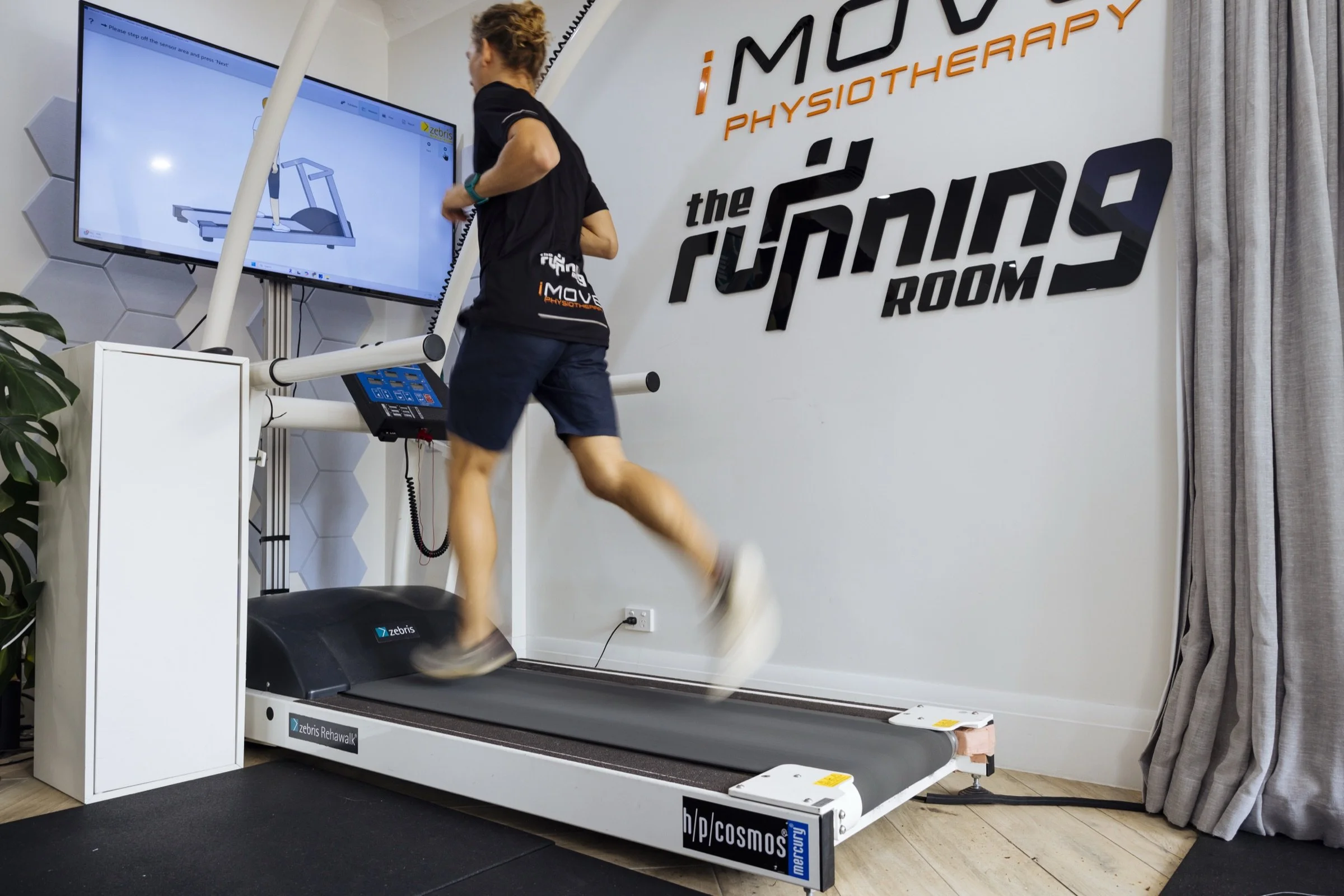
Training load, running mechanics on our Zebris instrumented treadmill (cadence and overstriding), VALD strength testing, footwear, and energy and hormonal health, with referrals to our sports doctors and nutritionists.
Return to running
Once you've had about a week of pain free walking and can hop on that leg without pain, start a walk and run program on alternate days, building over 4 to 6 weeks. Speed, tempo and hills come back last.
Can you run with a tibial stress fracture? No. Running on it can turn a stress reaction into a fracture, and a front of shin fracture into a complete break. Cross training keeps your fitness while the bone heals.
Tibial stress fracture physio near youBook your
assessment.
No GP referral needed. We refer for MRI when it's needed. Private health insurance accepted at all Australian clinics.
Tibial stress fracture FAQsQuestions
answered.
Can you walk with a tibial stress fracture?
Usually, yes, if walking is pain free and the fracture is on the inner edge of the shin. If walking hurts, or the fracture is on the front of the shin, you will often need a boot or crutches for a period of time first.
Is there a test for a shin stress fracture?
Your physio will press along the bone and ask you to hop on the sore leg. Sharp pain at one spot when hopping and when the bone is pressed is a strong sign. MRI confirms it and grades the injury. X ray and CT may also be used, depending on the location of your injury.
Do I need a moon boot for a tibial stress fracture?
Not usually for an inner shin stress fracture. A boot or crutches are used when walking is painful, for higher grade injuries, or for front of shin fractures. Our stress fracture physios will guide this process and its management for you.
Can shin splints turn into a stress fracture?
Yes. Shin splints and tibial stress fractures sit on the same scale of bone overload. Running through shin splints without changing your load can progress to a stress reaction and then a fracture. With the right advice and management from our stress fracture physios, we can reduce the risk of this happening.
Why does my tibial stress fracture keep coming back?
Repeat shin stress fractures usually point to a cause that wasn't fixed: training spikes, low energy availability (RED S), low vitamin D or bone density, or running mechanics that place extra load on your body. A full assessment, and often a bone health check, breaks the cycle.
What is a fibula stress fracture?
A stress fracture in the thin bone on the outside of the lower leg, usually a few centimetres above the ankle. It's low risk, and a 2023 review found an average of about 8 weeks back to sport. Our running physios can diagnose and treat this for you.
Get it checked.
Get back running.
The sooner a shin stress fracture is diagnosed, the sooner you're running again. Book a running physio assessment at your nearest clinic.
This page is general information and isn't a substitute for an individual assessment. If you can't put weight through your leg or have sudden severe pain, seek medical care promptly.