

Can You Still Run with Knee Osteoarthritis?
TL;DR: A knee osteoarthritis diagnosis doesn't have to mean the end of your running. With the right physio-led approach, many runners not only stay active but continue to run, train, and compete. Here's what you need to know about managing knee OA as a runner, and why how you run matters just as much as how much you run.
Yes, many people with knee osteoarthritis can and do continue running. The key is understanding your load, strengthening the right muscles, and working with physios who understand what running actually demands of your body. A blanket "stop running" is rarely the right answer, and for most active people, it doesn't have to be.
Knee OA and Running: Why Runners Are a Different Conversation
Knee osteoarthritis is a degenerative condition where the cartilage cushioning the knee joint gradually breaks down, leading to pain, stiffness, and reduced function. It's common, particularly in adults over 40, and it's one of the conditions we see regularly across our clinics.
But runners often present differently from the general OA population. You've built a relationship with movement. Running isn't just exercise, it's part of how you manage stress, connect with people, and structure your week. Telling someone to simply stop moving isn't just unhelpful, in many cases it's counterproductive.
The question isn't whether you have OA. The question is how we manage it so you can keep doing what you love.
Does Running Make Knee OA Worse?
This is one of the first things runners ask us, and it's worth addressing head on.
The relationship between running and knee OA is more nuanced than most people expect. Running doesn't cause OA, and in many cases, the compressive load from running can actually support joint health when managed correctly. The problem arises when load exceeds what the joint and the surrounding muscles can tolerate. That is a training and biomechanics problem, not an automatic reason to stop.
What matters most is how your body absorbs and distributes load with every stride. Running gait, foot strike pattern, cadence, hip strength, quad strength…all of these influence how much stress goes through your knee. If these aren't optimised, OA symptoms tend to flare. If they are, many runners continue for years without significant deterioration.
What Physio Actually Looks Like for Runners with Knee OA
Managing knee OA at The Running Room isn't generic. We work with runners, so our assessment and treatment approach is built around what running actually demands.
Running assessment and gait analysis
We use instrumented treadmills with pressure plates and high-speed motion capture to analyse exactly how you run. This gives us objective data on where load is going through your knee with every step and helps us understand what we can change. Small adjustments to cadence, trunk position, or foot strike can meaningfully reduce knee load without requiring you to stop training.
Targeted strength work
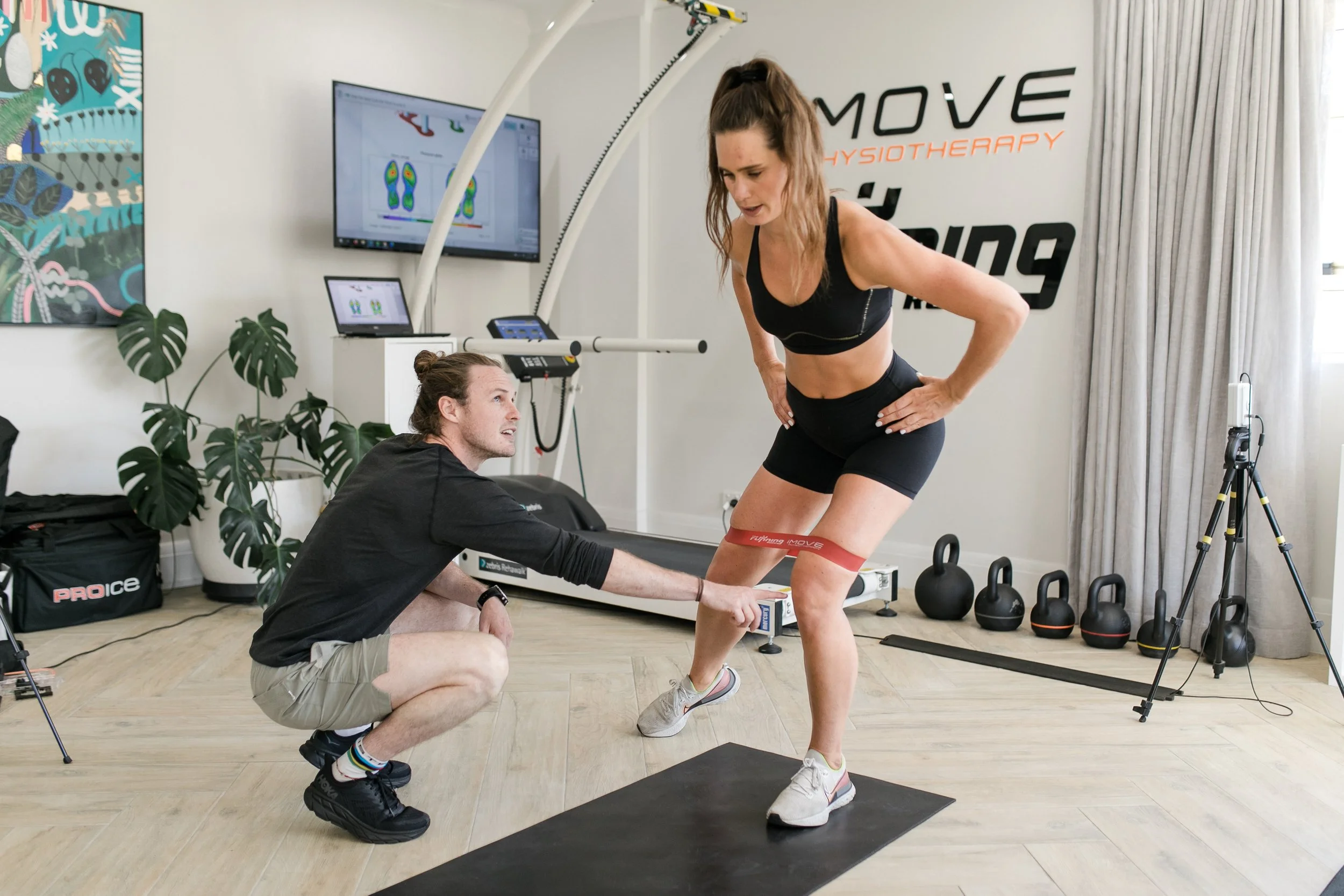
Weakness in the quadriceps, glutes, and hip stabilisers is one of the biggest drivers of knee OA symptoms in runners. Strengthening these structures reduces the load going through the joint itself and builds resilience over time. We use VALD force plate testing to identify specific strength deficits and build programs around them.
Manual therapy and dry needling
Hands-on treatment plays a real role, particularly during flare-ups or when stiffness is limiting your ability to train. Manual therapy restores mobility in and around the joint, and dry needling can address muscle tension and referred pain patterns that compound the problem. These approaches support your ability to keep moving, not replace it.
Load management
This is where a lot of runners go wrong on their own. Too much, too soon, or a sharp spike in training volume, is often what triggers or worsens symptoms. We help you build a training structure that respects the joint's current capacity while continuing to progress your fitness.
Education
Understanding your condition changes how you manage it. We spend real time helping patients understand what OA is, what's actually happening in the knee, and what they can control. Runners who understand their load and their limits manage OA far more successfully long-term.
Surgery is Rarely the Starting Point
For runners with knee OA, surgery tends to be a conversation that comes after conservative management has been properly explored. Recent studies have shown that for most people, non-surgical treatment is effective for both pain relief and function. That's not to say surgery is never appropriate. Sometimes it is. But for the majority of runners we see, a structured physio program gives them a quality of life and activity level they didn't think was still possible.
Our approach is always to understand what you want to achieve, build a plan around that, and work through conservative options first. Physio won't reverse the structural changes in the joint but it can significantly reduce pain, restore function, and keep you running.
What to Expect at Your First Appointment
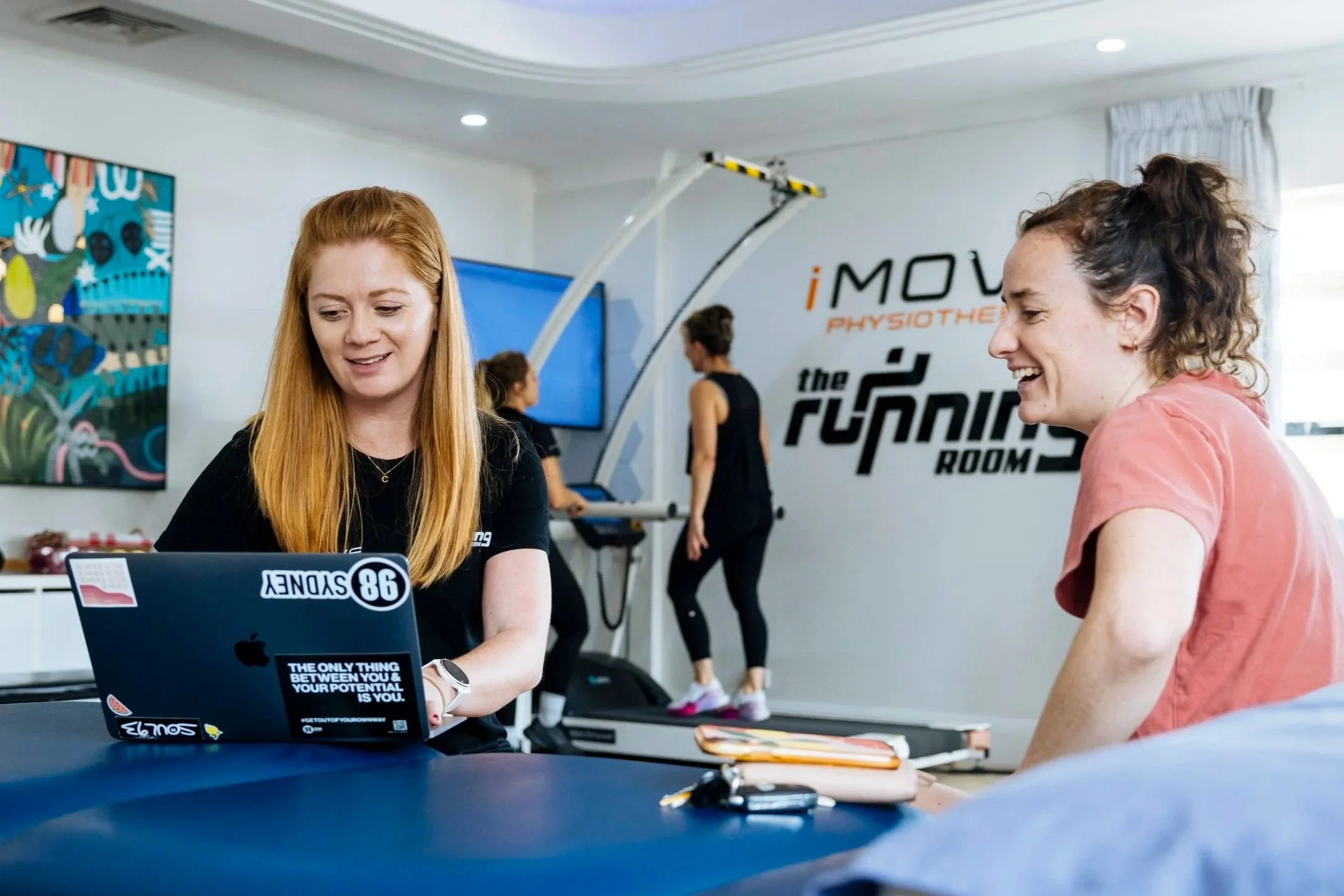
Your first appointment with us starts with a thorough conversation about how the OA is affecting your running and your daily life, what your training looks like, and what your goals are. We then complete a comprehensive physical assessment, including relevant testing. Where appropriate, we incorporate our running assessment technology to get a clear picture of how your gait may be contributing to symptoms.
You leave with a clear diagnosis, an understanding of what's driving your pain, and a long-term treatment plan that is built around running, not around avoiding it.
Key Takeaways
A knee OA diagnosis doesn't automatically mean you need to stop running. For many runners, with the right approach, it's entirely manageable.
Running gait and biomechanics play a major role in how much load goes through an arthritic knee — optimising these can make a significant difference.
Targeted strength work, load management, and hands-on treatment form the foundation of effective OA management for runners.
Surgery should be the last resort. Most runners with knee OA respond well to conservative, physio-led management.
The earlier you get a proper assessment, the more options you have.
Ready to keep running? Book an assessment at The Running Room in Clovelly, Waverley, South Yarra, or London and let's build a plan that works with your running
Frequently Asked Questions
Can I keep running if I have knee osteoarthritis? In many cases, yes. Running doesn't automatically worsen OA, and for well-managed patients, it can be continued safely. The key is optimising load, strengthening the right muscles, and monitoring symptoms. A running-specific assessment is the best place to start.
Will a running assessment help with my knee OA? Absolutely. Gait analysis allows us to see exactly how load is being distributed through your knee with every stride. Small, targeted changes to your running mechanics can meaningfully reduce stress on the joint without impacting your training significantly.
How is knee OA different from runner's knee? Runner's knee, or patellofemoral pain, is pain at the front of the knee caused by compression and irritation of the patella against the femur. Knee OA is a degenerative condition affecting the joint cartilage more broadly. They can overlap and sometimes coexist, which is why a proper assessment and clear diagnosis matters before starting treatment.
What's the difference between osteoarthritis and rheumatoid arthritis? Both affect the joints but they have very different causes. Osteoarthritis is degenerative — cartilage wears down over time due to age, load, or previous injury. Rheumatoid arthritis is an autoimmune condition where the immune system attacks the joint lining, causing inflammation. RA often affects multiple joints symmetrically and can occur at any age. OA tends to develop in specific joints that have been subjected to more wear and load. Both can benefit from physiotherapy, but the treatment approach differs, so a confirmed diagnosis is important.
Is knee replacement the only option if physio doesn't work? Not necessarily. Depending on your situation, there may be other non-surgical options to explore. Your physio and GP can work through that together. Surgery is a meaningful decision and one that should come after conservative management has been given a proper chance.