


How to Treat Achilles Tendinopathy: What Actually Works
TL;DR: Achilles tendinopathy won't fix itself with rest and stretching alone - in fact, both can make things worse. The most effective treatment is progressive loading: the right amount of exercise at the right time, tailored to whether your tendon is in an acute or chronic phase. Recovery takes anywhere from 6 weeks to 6+ months depending on how long you've had it and how consistent you are with rehab. The sooner you get it properly assessed, the faster you'll recover.
If you've been dealing with Achilles pain, you've probably already tried resting it, stretching it, or hoping it would just go away on its own. Generally, none of those things work and there's a good reason why.
Achilles tendinopathy is one of the most common injuries we see across our clinics, particularly in runners and sporting athletes. Here's what you actually need to know to recover properly and get back to doing the things you love.
What Is Achilles Tendinopathy?
Achilles tendinopathy is an overuse injury affecting the Achilles tendon. This is the thick band of tissue connecting your calf muscles to your heel bone. It typically presents as pain, stiffness, and sometimes swelling at the back of the heel, often worst first thing in the morning or at the start of exercise.
It's not the same as an Achilles rupture, and despite what many people fear a tendinopathy does not mean your tendon is about to snap. More on that shortly.
The Two Biggest Mistakes People Make
We consistently see two patterns that delay recovery:
1. Ignoring it and pushing through. Tendons respond poorly to excessive load when they're already irritated. Continuing to train at full intensity without addressing the issue almost always makes things worse and extends your recovery significantly.
2. Stretching the Achilles. This one surprises a lot of people. Stretching an irritated Achilles, particularly aggressive calf stretches, can actually worsen symptoms. It feels like the right thing to do, but the evidence suggests otherwise.
The Biggest Myth: "It'll Just Settle Down"
One of the most common things we hear is "I've been resting it for weeks but it keeps coming back when I run."
That's because rest alone doesn't fix Achilles tendinopathy - it just temporarily reduces the load on an irritated tendon. The moment you go back to running, the symptoms return because the underlying issue (tendon capacity and load tolerance) hasn't been addressed.
Achilles tendinopathy is responsive to changes in load. The goal isn't to avoid load - it's to find the right amount of load and progressively build from there.
The other common fear is that tendinopathy means you're at risk of rupture. In the vast majority of cases, this is not true. Tendinopathy and rupture are different pathologies. Appropriate loading and rehabilitation actually helps strengthen the tendon - it doesn't put it at greater risk.
How We Treat Achilles Tendinopathy
Treatment depends heavily on whether the tendon is in an acute or chronic phase.
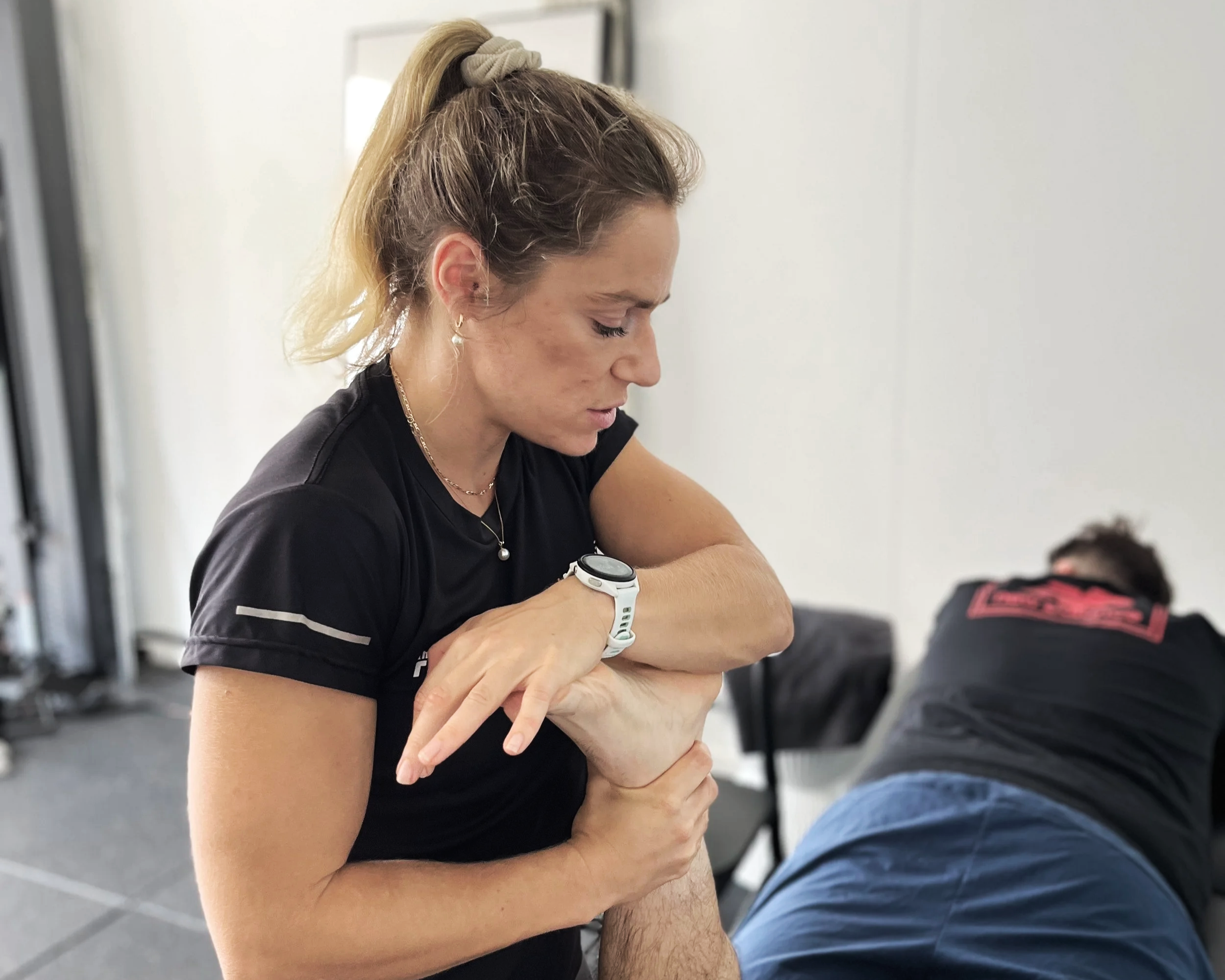
Acute Achilles Tendinopathy
When symptoms have come on recently or following a sudden spike in training load, the priority is:
Relative rest and de-loading - reducing the volume and intensity of aggravating activities (but not stopping completely)
Gradual strength work - beginning to build tendon capacity through appropriately loaded exercises
Controlled return to running - reintroducing running load progressively once symptoms have settled
The key here is that "rest" means relative rest. Complete rest is rarely the answer.
Chronic Achilles Tendinopathy
For longer-standing cases where symptoms have persisted for months, the approach shifts:
Heavy slow resistance training - research consistently supports heavy, slow, progressive loading as the most effective way to improve tendon structure and reduce pain
Isometric exercises - particularly useful for managing pain during the rehab process as well as loading the tendon in a controlled way
Load management - carefully monitoring and adjusting training load to stay within the tendon's current capacity while building it over time
Recovery Timeline
This is one of the hardest questions to answer because it genuinely varies. Acute cases with good compliance can resolve in as little as 6 weeks. Chronic tendinopathy that's been present for months or years may require 6 months or more of consistent rehabilitation.
The most important factor in your outcome is not the treatment itself - it's consistency with your loading and rehab program.
How We Assess Differently at The Running Room
Because the majority of our patients are runners and sporting athletes, our assessment process goes beyond a standard physio consult.
We use an instrumented treadmill with force plates to analyse your running technique and load distribution - giving us objective data on how your body is absorbing impact and where excessive stress may be occurring. This allows us to identify contributing factors that a standard assessment would miss.
We look at the whole picture: your training history, load progression, footwear, running mechanics, strength deficits, and your goals. The aim isn't just to settle your pain - it's to understand why this happened so it doesn't come back.
Our goal is always to get you back to doing the things you love, whether that's your weekly long run, weekend sport, or simply walking the dog without wincing.
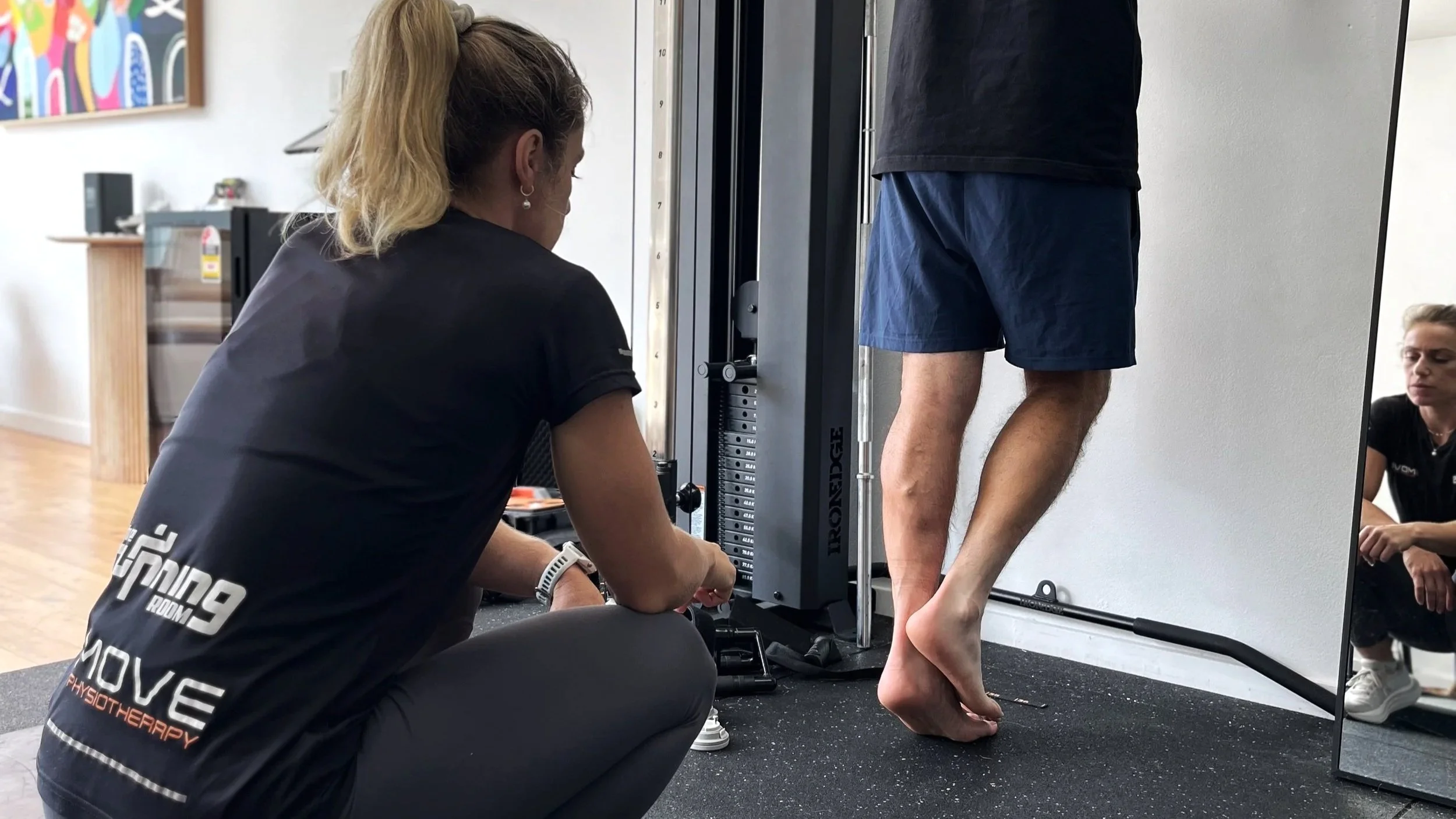
When to See a Physiotherapist
You should book if you have achilles pain regardless but here are some guidelines to booking:
You've had Achilles pain for more than 3 days and it isn't settling
Symptoms return every time you get back to running
You've tried rest for a few days and it hasn't resolved
Your pain is getting progressively worse
You're unsure whether to continue training
Early intervention always leads to faster recovery. The longer tendinopathy is left untreated, the more entrenched the changes in the tendon become - and the longer rehabilitation takes.
Ready to Get Back Running?
At The Running Room, we see Achilles tendinopathy regularly across our Sydney, Melbourne and London clinics and our team understands what runners need: an accurate diagnosis, a clear plan, and a physio who gets that "just stop running" often isn't a realistic answer.
Book an appointment with one of our physios today and get a thorough assessment so we can build a plan that gets you back on track.
The Running Room - Your running injury specialist physiotherapists.
Frequently Asked Questions
Can I keep running with Achilles tendinopathy? It depends on your symptoms. A useful rule of thumb is the "next day test" - if your pain is no worse the morning after a run than it was before, your load is likely manageable. If symptoms are consistently flaring the day after, you need to reduce your volume. Complete rest is rarely the answer - it just delays the problem.
Why does my Achilles hurt more in the morning? Morning stiffness and pain is one of the hallmark signs of Achilles tendinopathy. The tendon tightens during rest and then has to suddenly manage load when you get up. It often eases once you've been moving for 10–15 minutes - this is called the "warm-up phenomenon."
Should I stretch my Achilles tendon? This is one of the most common things people try - and one of the things most likely to make it worse. Aggressive calf stretching can increase compression at the tendon, which aggravates symptoms. Strengthening through appropriate loading is a far more effective approach.
Will Achilles tendinopathy lead to a rupture? This is a very common fear and, in most cases, the answer is no. Tendinopathy and rupture are different conditions. In fact, appropriate progressive loading as part of rehabilitation helps strengthen the tendon - not weaken it.
What's the difference between Achilles tendinopathy and Achilles tendinitis? "Tendinitis" implies active inflammation, but research has shown that chronic Achilles tendon pain is rarely inflammatory. "Tendinopathy" is the more accurate term - it describes a change in tendon structure and capacity. The distinction matters because anti-inflammatory treatments like ice or NSAIDs are generally not effective for true tendinopathy.
Do I need a scan or MRI? Usually not. Achilles tendinopathy is primarily a clinical diagnosis based on your history and a physical assessment. Interestingly, imaging findings often don't correlate well with pain - some people have significant tendon changes on MRI with no symptoms at all. Scans are more useful for ruling out other conditions or in cases that aren't responding to treatment.
How long will it take to recover? It varies significantly. Acute cases caught early and managed well can resolve in around 6 weeks. Chronic tendinopathy that's been present for months may take 6 months or more. The single biggest factor in your recovery speed is consistency with your loading programme - not the specific treatment.
I've been resting for weeks but the pain keeps coming back when I run - why? Because rest alone doesn't fix the underlying problem. Achilles tendinopathy responds to changes in load. Rest reduces irritation temporarily, but the tendon's capacity hasn't improved - so symptoms return the moment you go back to running. What you need is a structured, progressive loading programme that gradually builds the tendon's ability to handle the demands you're placing on it.