

Niggle or Injury? What to Do About Aches and Pains in the Final Weeks Before the Sydney Marathon
TL;DR: The TCS Sydney Marathon lands on Sunday 30 August 2026, which means most training plans are right in their peak load block. This is prime time for niggles to show up. A genuine niggle eases within 24 to 48 hours and doesn't change your running form. If it lingers, worsens, or you start compensating, that's an injury signal and it needs a proper look, not another long run to test it out.
Wondering whether that ache you picked up on the weekend long run is something to run through or something to sort out? Quick answer: if it settles within a day or two of easier running and doesn't change your stride, it's most likely a niggle. If it's still there after 48 hours, gets sharper as the run goes on, or you're noticing yourself land differently to avoid it, stop testing it and get it assessed.
Six weeks out is when training load catches up with you
This point in a marathon block usually carries the heaviest weekly kilometres, the longest long runs, and often the first sessions with meaningful race-pace work built in. Tissue and joints that have handled a steady base for months can start to protest once that volume stacks up without enough recovery between sessions.
It's also the stage where runners are most likely to push through discomfort, reasoning that taper is coming and the hard work needs to get banked now. That mindset is understandable, but it's also exactly how a manageable niggle turns into the injury that ends a race.
Telling a niggle from an injury
Signs pointing to a niggle:
Settles within 24 to 48 hours of reduced load or rest
Doesn't worsen from one session to the next
Doesn't change your stride, cadence, or running posture
Sits low on the pain scale and doesn't spike sharply mid-run
Signs pointing to an injury:
Still present, or worse, after two days
Builds through the run rather than easing once warmed up
You're altering your gait to manage it, even subtly
Swelling, sharp pain, or pain disturbing sleep
The first 48 hours matter more than the next long run
When something new turns up, the first move is to reduce load, not necessarily stop altogether. Drop a hard session to easy, cut the distance, or take a full rest day, then watch how it responds over the next 48 hours. Settling with easier running is a good sign you can rebuild volume carefully. No change, or it's affecting form, means it's time for an assessment rather than another test run at pace.
What we're seeing most in runners right now
A handful of patterns repeat every marathon cycle at this stage of training:
Calf and Achilles tightness, often tied to a jump in volume, hills, or added tempo work
ITB and lateral knee pain, commonly linked to changes in mechanics as fatigue builds late in long runs
Shin discomfort, ranging from normal muscle fatigue through to load-related issues that need managing
Hip and glute niggles, often connected to strength work dropping off as running volume takes priority
Foot and arch soreness, particularly where mileage has increased faster than footwear or surface tolerance
Every one of these is common and every one of these is manageable if it's caught early and training is adjusted around it instead of ignored.

When to book a physio appointment
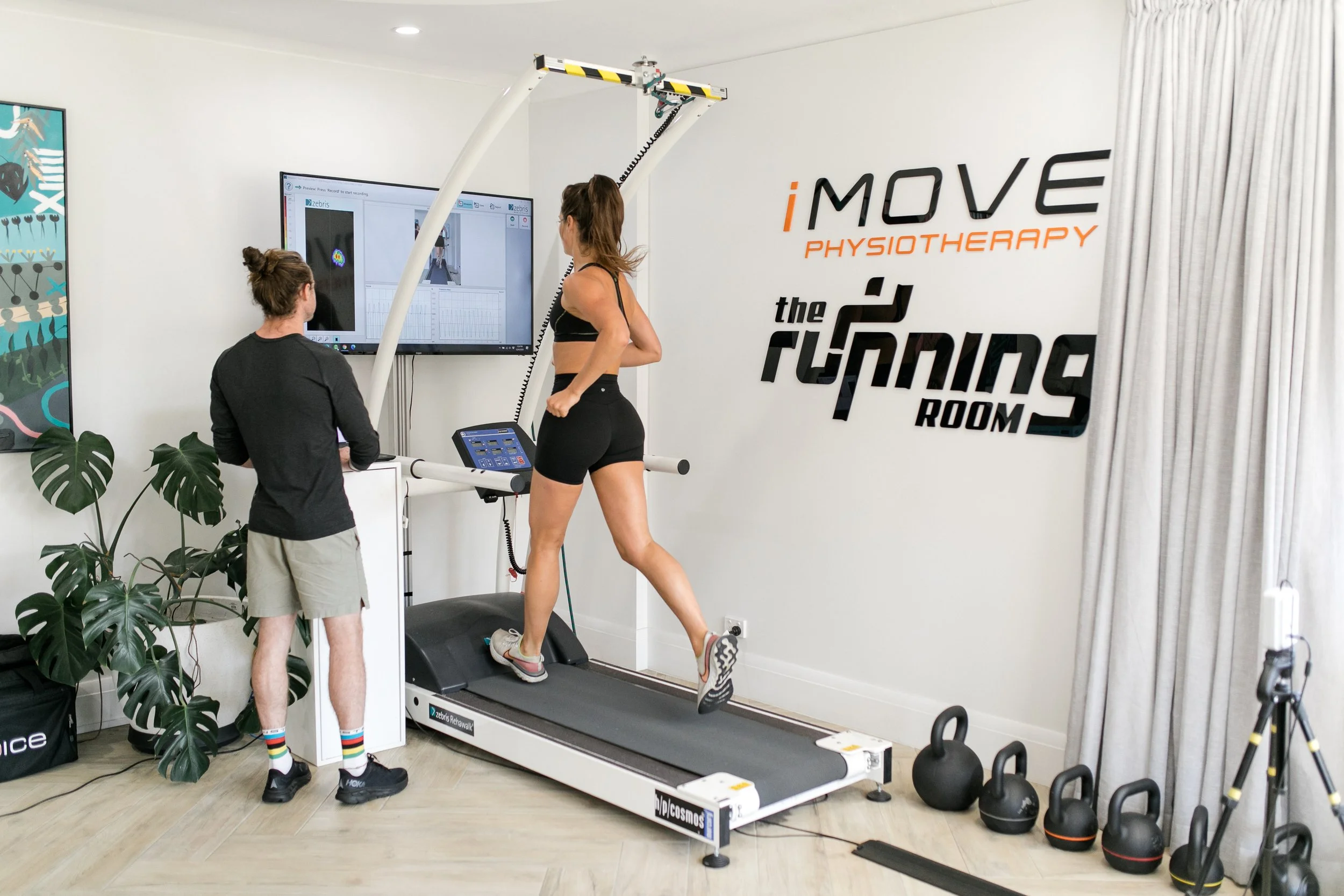
Book in if the ache hasn't shifted in 48 hours, if it's building rather than easing, if it's changing how you run, or if you're simply unsure what's going on. Six weeks out still leaves enough runway to adjust load, manage tissue properly, and get to race day in solid shape. Two weeks out, options shrink fast. Whether you train out of our Sydney, South Yarra, Gold Coast, or London clinic, the same principle applies: earlier assessment means more options.
Key takeaways
The marathon is 30 August 2026, and most runners are now carrying their heaviest training load of the block, which is when niggles are most likely to surface.
A genuine niggle eases within 24 to 48 hours and doesn't alter your running form. Anything past that deserves a proper look.
Reduce load rather than stopping outright when something new appears, then reassess after a couple of easier days.
Calf, Achilles, ITB, shin, hip, and foot complaints are all common in the final training block and respond well to early management.
Six weeks out gives you real options to adjust and recover. Two weeks out gives you far fewer. Get it looked at sooner rather than later.
FAQ
Do I need to stop running entirely if something feels off? Not always. Reducing load and monitoring the response over 48 hours is usually the first step. Full rest matters more when pain is sharp, worsening, or changing your gait.
Is six weeks enough time to sort out a niggle before race day? Generally yes. Six weeks is workable for managing most niggles and adjusting training, provided it's addressed rather than run through.
What if I only feel it in the last few kilometres of a long run? That's still worth flagging. Pain that appears specifically under fatigue often relates to how your form breaks down late in a run, which a physio can assess and help address.
Are some aches normal this close to the marathon? General muscle fatigue and tightness are expected during a heavy training block. The distinction is between fatigue that eases with easy days and pain that persists, sharpens, or changes how you run.
Can I book an assessment without a doctor's referral? Yes, no referral is required to book a running assessment or physio appointment.